Do not enter the affected space. Do not run your HVAC or any fan. Do not attempt to clean it yourself. Call Water Restoration Pros now.
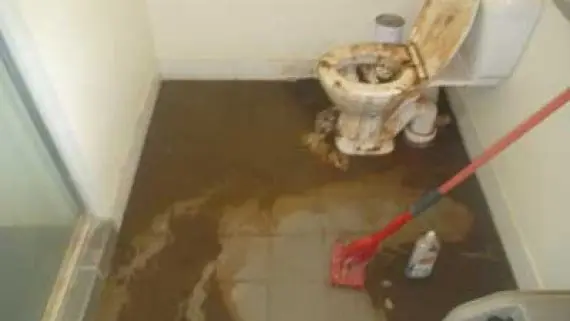
Raw sewage in your home is not a water damage event. It is a biohazard event. Sewage is classified as Category 3 black water from the moment it enters the building, and it contains E. coli, Hepatitis A, Norovirus, and other pathogens. Water Restoration Pros handles full biohazard extraction and decontamination in Everett. Local since 2021. On-site within 60 minutes.
When sewage backs up, three rules apply immediately:
Rubber boots, rubber gloves, eye protection, and at minimum an N95 respirator. If you do not have these, stay out.
Sewage releases airborne particles containing fecal bacteria and viruses. The HVAC system distributes them to every room in the house. Turn the thermostat off.
Cleaning it up yourself without a professional remediation certificate voids your insurance claim and creates a legal disclosure problem if you ever sell the home.
When you call Water Restoration Pros, we arrive in Tyvek suits, respirators, gloves, and eye protection. This is not cleaning gear. It is biohazard response gear. We set up negative air pressure containment to prevent spread, extract the sewage, remove all porous materials, disinfect every surface, and provide the remediation certificate your insurer requires.
We are based right here in Everett and have served Snohomish County since 2021. When you call, you reach a local crew that knows Everett sewer infrastructure, not a national call center.
Sewage backup in your home right now?
Our Everett crew is ready — 60-minute arrival, any hour.
The actions you take in the first few minutes determine whether the contamination stays contained or spreads. Follow these steps in order.
Rubber boots, rubber gloves, eye protection, and at minimum an N95 respirator. If you do not have all of these, stay out of the affected area.
Sewage releases airborne particles containing pathogens. Running heating, air conditioning, or any fan distributes contaminated air throughout the house. Do this before anything else if the HVAC is running.
If homes on your street have the same problem at the same time during a storm, the backup is coming from the city main line, not your private lateral. Call Everett Public Works at 425-257-8800 immediately. This matters for determining who is responsible and what claims you can file.
If a toilet or floor drain is actively overflowing, shut the supply valve to the toilet or the building water main. Do not flush anything.
Mopping without professional containment and biohazard disposal protocols spreads the contamination. It also voids your insurance claim. Insurers require a professional remediation certificate.
The restoration industry classifies water damage in three levels. Category 1 is clean water: a burst pipe, a fresh appliance leak. Category 2 is grey water: a washing machine overflow. Category 3 is black water: contaminated with pathogens.
Every other water damage type on this site can start clean and worsen. Sewage backup starts at Category 3 from the first drop, and that changes everything about how the cleanup is done.
Raw sewage contains E. coli, Hepatitis A, Norovirus, Salmonella, and Campylobacter. These cause real illness — through skin contact, inhalation, or contaminated surfaces — within hours to days of exposure. The risk is immediate.
Sewage releases microscopic airborne particles through aerosolization. When your HVAC runs, it pulls contaminated air through the return vents and pushes it into every room. A basement backup becomes a whole-house contamination event within minutes. Turn the system off at the thermostat before anything else.
Carpet, pad, drywall, insulation, and baseboards that absorbed sewage must be removed. They cannot be disinfected. Pathogens penetrate porous materials and cannot be cleaned from the surface. Hard surfaces — concrete, tile, metal — can be saved. Porous materials cannot.
Worried sewage contamination has spread further than you can see?
We test and map every contaminated surface before cleanup begins.
Before cleanup begins, understanding what can and cannot be saved sets accurate expectations. The category of water determines the outcome, not the appearance of the material.
All of these must be bagged inside the containment zone and disposed of through approved biohazard waste channels. There are no exceptions. The contamination penetrates the material and cannot be disinfected from the outside.
The distinction is simple: if the material is porous, it comes out. If it is not, it can be cleaned.
Mopping up sewage with household cleaners removes the visible contamination but leaves pathogens embedded in surfaces and materials.
Cleanup done without a professional remediation certificate cannot be documented to the required standard. Your insurance company will deny the claim without it. When you sell the home, Washington requires disclosure of known biohazard events. An undocumented sewage cleanup discovered during a buyer inspection can kill a sale. The remediation certificate from Water Restoration Pros is permanent documentation that the cleanup met the IICRC standard.
This is the most rigorous cleanup process on the site. Category 3 events require steps that do not exist in clean-water restoration.
The crew arrives in Tyvek suits, respirators, gloves, and eye protection. Plastic containment barriers are installed and HEPA air scrubbers set to create negative air pressure. Contaminated air stays in the containment zone.
If sewage is still actively entering, we stop it: shutoff valves, main cleanout plug, or coordination with Everett Public Works for a city main event. No cleanup is effective while the source is still active.
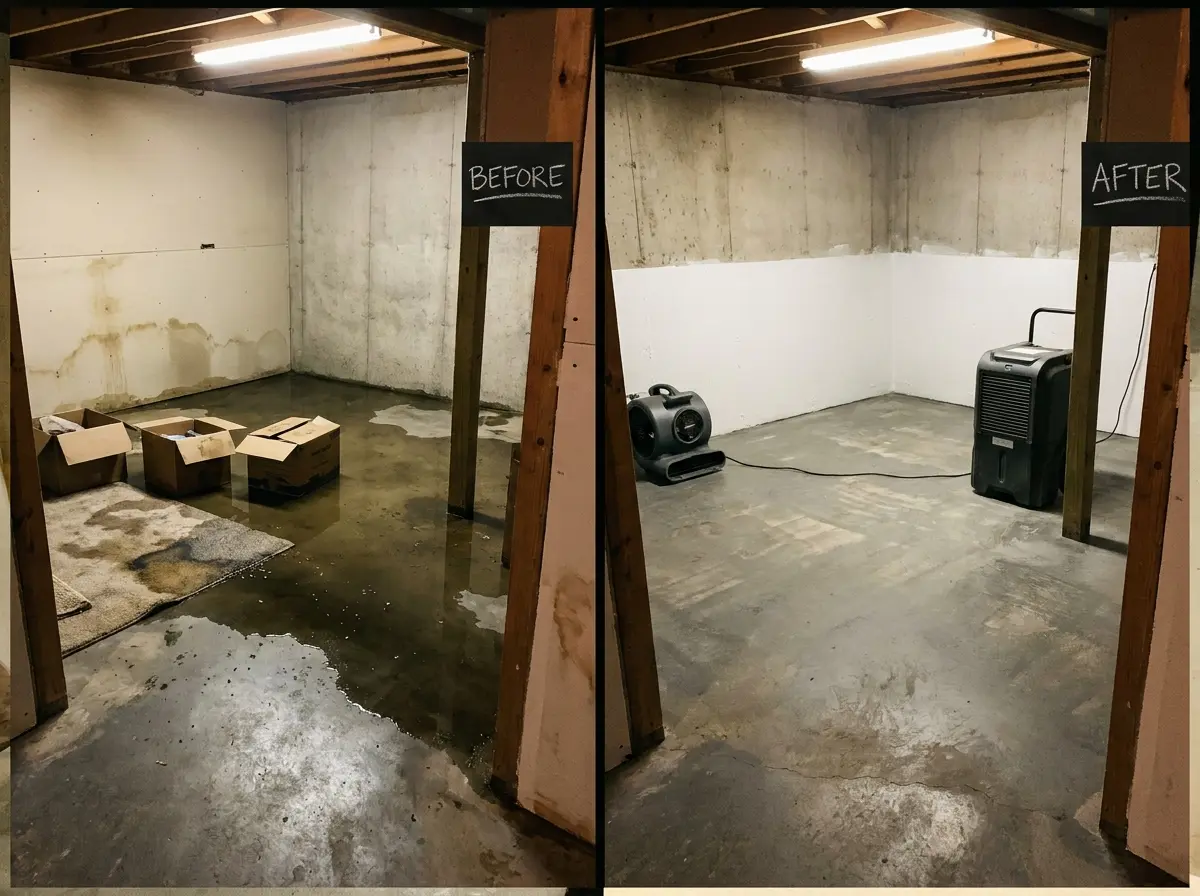
Industrial extraction pulls standing sewage. Then all porous materials in the contaminated zone are removed: carpet, pad, drywall, insulation, and baseboards. All removed materials are bagged as biohazard waste and documented for your insurance claim.
Every hard surface that contacted sewage is cleaned with EPA-registered antimicrobial products at the concentration required for Category 3 decontamination. Multiple cleaning passes are required. The product selection and contact time are specific to human pathogen elimination.
Industrial drying equipment runs on the decontaminated structure. Sewage odor requires specific treatment: thermal fogging or ozone treatment neutralizes odor compounds embedded in concrete and wall framing rather than masking them.
A final inspection confirms contamination is within safe limits. We issue the remediation certificate your insurer requires and that serves as permanent documentation for future home sales.
Ready to fully restore your Everett home?
One call covers extraction, decontamination, drying, and full insurance documentation.
Here is the fact many Everett homeowners learn too late: standard homeowners insurance does not cover this type of backup. This is one of the most commonly misunderstood insurance situations in residential property.
A specific water backup endorsement, sometimes called a backup rider, must be purchased separately. According to restoration industry guidance, this rider costs roughly $50 to $250 annually and typically provides $5,000 to $25,000 of coverage for sewage cleanup, material replacement, and sometimes damaged belongings. In Everett, with its older infrastructure and CSO risk, this coverage is worth carrying. Check your policy now. If you do not have it, add it.
Your insurer requires a professional remediation certificate, photos of the backup before cleanup, and a contamination assessment record. We prepare all of this as part of the job. DIY cleanup before documentation is one of the most common claim failures.
If Everett Public Works confirms the backup originated from a city main failure or CSO event, you may have a claim against the city rather than your homeowner insurer. This is a different claims process and may not require the backup rider. We document the contamination scope regardless of source, which supports both pathways.
In Washington, known biohazard events are a required disclosure item in a home sale. A backup event that was cleaned without professional certification is an undocumented biohazard event. If it surfaces during a buyer inspection, it can stall or kill a sale. The remediation certificate is your protection against this liability.
Not Sure If You’re Covered? Call UsSewage cleanup costs more per square foot than clean-water events because of the containment, PPE, biohazard disposal, multiple disinfection passes, and clearance testing required. The scope is the primary cost driver.
| Contamination Scope | Typical Cost | What It Includes |
|---|---|---|
| Contained to one room | $2,000 to $5,000 | No finished materials, hard surfaces only |
| Finished space affected | $5,000 to $20,000 | Drywall and flooring removal, biohazard disposal |
| Full finished basement | $10,000 to $30,000+ | Full material removal, rebuild scope |
| Multi-room with structural damage | $20,000 to $50,000+ | Structural repair added to remediation |
If you carry the water backup endorsement, most of these costs are covered. Without the endorsement, all costs are out of pocket. The endorsement costs $50 to $250 per year. It is the most cost-effective insurance decision an Everett homeowner in an older neighborhood can make.
Want a full quote with decontamination and repairs included?
Free same-day assessment — we document and bill your insurer directly.
The source determines who is responsible for the repair, who may cover the cleanup, and whether it will happen again.
The lateral is the pipe running from your home to the city main. You own it entirely. When it blocks, sewage backs up through the lowest fixtures — usually floor drains and toilets. This is the most common cause.
In Everett, the leading culprit in pre-1970 homes is Orangeburg or clay pipe. Orangeburg is a paper-fiber composite that softens and collapses over time. Clay cracks at joints and lets tree roots in. Over a third of Everett homes predate 1970, and many still have original laterals. A camera inspection is the only way to confirm the condition.
The City of Everett operates 13 combined sewer overflow outfalls. During heavy rain, the system can overwhelm and push sewage back through floor drains in older central and northwest Everett neighborhoods. A $40 million storage project is underway but won’t be operational until late 2027.
If multiple neighbors back up simultaneously during a storm, call Everett Public Works at 425-257-8800. That points to a city main event, not your lateral — and changes the claims pathway.
We cover all of Everett, including zip codes 98201, 98203, and 98208. The highest-risk neighborhoods for backup events are the older areas of central and northwest Everett, Bayside, and Port Gardner, where pre-1970 homes have clay or Orangeburg sewer laterals, mature street trees, and connection to the city combined sewer system. These neighborhoods have the highest concentration of the three main backup risk factors together.
Yes, quickly. Raw sewage contains E. coli, Hepatitis A, Norovirus, and Salmonella, among other pathogens. Skin contact, inhalation of airborne particles, and contaminated surfaces can all cause illness within hours to days of exposure. Do not enter a sewage-contaminated space without rubber boots, rubber gloves, eye protection, and at minimum an N95 respirator.
No, not under a standard policy. Sewage backup requires a specific water backup endorsement purchased separately for $50 to $250 per year. Without this endorsement, cleanup costs are entirely out of pocket. Do not attempt DIY cleanup without professional documentation either — doing so voids any future claim and creates a resale disclosure problem in Washington.
Turn off your HVAC immediately — sewage releases airborne pathogens that spread through ductwork. Do not enter without full PPE. If multiple neighbors are simultaneously affected during a storm, call Everett Public Works at 425-257-8800; this may indicate a city main event rather than your private lateral. Then call a certified biohazard cleanup company.
It depends on the source. If your private sewer lateral blocked, you are responsible for both the plumbing repair and cleanup. If multiple neighbors experience simultaneous backups during a heavy rain event, the City of Everett combined sewer system may be the source. Contact Everett Public Works at 425-257-8800 to report and document this. A confirmed city main event supports a claim against the city.
Multiple drains backing up simultaneously throughout the home, gurgling from floor drains when a toilet is flushed, sewage smell from floor drains or toilets, and water pooling near basement floor drains. A single slow drain is usually a local clog. When multiple fixtures fail together, the problem is in the main lateral or deeper, and the backup is imminent.
You should not. DIY cleanup without professional certification voids your insurance claim and creates a legal disclosure problem. Category 3 sewage requires biohazard containment, full PPE, EPA-registered disinfectants at specific concentrations, biohazard waste disposal, and a remediation certificate. Mopping without these steps leaves pathogens behind and eliminates your ability to document the cleanup for insurance or a future home sale.
A small, contained backup with no finished materials typically takes two to three days: extraction and material removal on day one, disinfection and drying on days two and three, with the clearance test at the end. Larger events involving a finished basement or multiple rooms take one to two weeks. The clearance test must be passed before the remediation certificate is issued.
Orangeburg is a paper-fiber composite material used in sewer laterals before the 1970s. It absorbs moisture, softens, and collapses over time. Many pre-1970 Everett homes still have original Orangeburg laterals well past their service life. A backup in a pre-1970 Everett home has a high probability of Orangeburg pipe failure. A camera inspection of the lateral is the definitive way to confirm the condition.
A small, contained backup with no finished materials runs $2,000 to $5,000. A backup spreading into finished space with drywall and flooring removal runs $5,000 to $20,000. A full finished basement can reach $30,000 or more. If you carry the water backup endorsement, most costs are covered. Without the endorsement, all costs are out of pocket.
A remediation certificate is professional documentation confirming biohazard cleanup was completed to IICRC Category 3 standards. Your insurer requires it to process a backup claim. In Washington, it is also a required disclosure document: known biohazard events must be disclosed in a home sale, and an undocumented cleanup discovered during inspection can stop a sale. The certificate protects you in both situations.
Still have questions about sewage backup cleanup?
Our Everett team is live right now — no bots, no hold music.
Our IICRC-certified crew is ready 24/7. We respond in 60 minutes — nights, weekends, and holidays.
(425) 433-9550