When the Snohomish River overflows or a storm pushes water into your home, you are not dealing with clean water. Water Restoration Pros handles flood cleanup as contaminated water that carries bacteria, sewage, and debris — the way it has to be done.
A flooding home cannot wait, and neither do we. Water Restoration Pros answers live any hour of the day, including holidays and during the storms that cause the flooding. Our local Everett crew arrives within 60 minutes with truck-mounted extraction equipment, ready to pull out contaminated water safely and start drying before the damage spreads.
The first hours matter most. Floodwater soaks into walls, flooring, and subfloor fast, and mold can start within 24 hours. The sooner we begin, the more of your home we can save and the lower your final cost.
Flooding Right Now? Call 24/7Floodwater in your home right now?
Our Everett crew is ready — 60-minute arrival, any hour.
Everett floods for reasons specific to this area. Knowing why helps you understand what you are dealing with and what your insurance will and will not cover.
Everett sits at the Snohomish River delta. When days of rain push the river up, it reaches the low-lying neighborhoods first. During the December 2025 storms, the Snohomish River passed its 1990 record flood level. The city watched Riverfront Boulevard in the Port Gardner and Lowell areas, where water threatened to reach the road near the Overlook at Riverfront development.
We know how Everett floods because we were here for it. During the record December 2025 storms, we worked across the city, including the Snohomish River lowlands and the neighborhoods along Riverfront Boulevard that the city monitored closely.
Atmospheric river storms hit the Pacific Northwest every year from October through March. The December 2025 event was among the strongest in the history of the Puget Sound region, and three of the state's largest rivers broke all-time records. The Stillaguamish River in Snohomish County broke its own record two years earlier, in December 2023. According to the Washington Governor disaster declaration, the rain fell for 18 straight days. This is a recurring risk you can plan for.
Snohomish County adopted updated flood maps in June 2020 that mark the Special Flood Hazard Areas across Everett. About 13% of Everett buildings sit in a flood risk zone. You can check your own address on the Snohomish County flood risk page. If your home is in one of these zones, your flood zone matters a great deal for your insurance claim.
Homes in a designated Special Flood Hazard Area are typically required by lenders to carry NFIP flood insurance. Homes outside those zones can still flood — stormwater flooding and groundwater flooding affect neighborhoods well beyond the mapped hazard zones. Flooding can happen anywhere in Everett during an atmospheric river event.
Flooded right now? Call Water Restoration Pros for a fast, contamination-safe response anywhere in Everett. (425) 433-9550
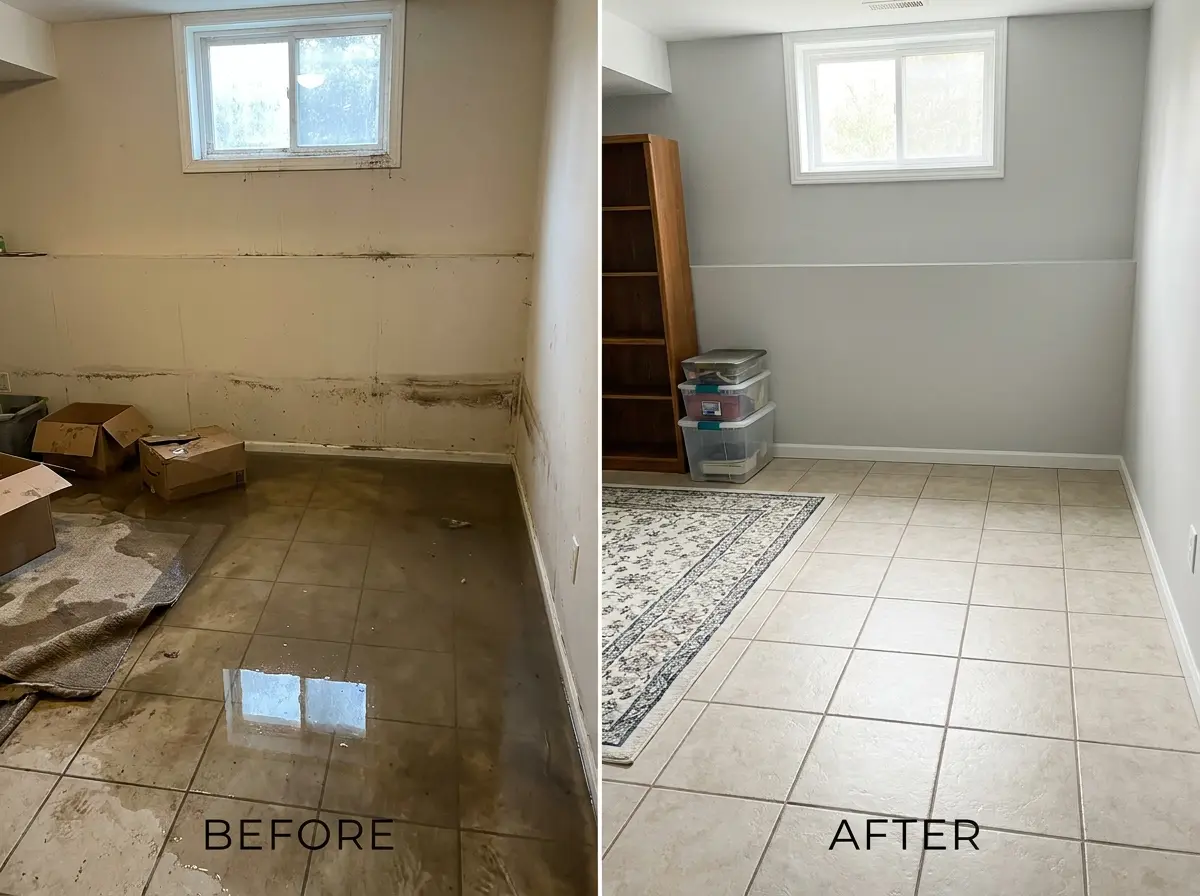
A burst pipe leaks clean water. A flood brings in dirty water. That single difference changes everything about how the cleanup works, what it costs, and which of your belongings can be saved.
Everett flood events are almost always Category 3 — contaminated water from river overflow, stormwater, or sewage. Carpet, drywall, and insulation that soaked it up have to be removed, not dried.
River and stormwater floods carry sediment, mud, and debris into the home. All of it has to be physically removed before drying can even start — a step a burst pipe never involves.
Every surface the water touched needs antimicrobial cleaning. The WA Dept of Health advises avoiding contact with floodwater and wearing protective gear during cleanup.
Floodwater brings mold spores in directly. Our damp Everett climate speeds growth. Every hour you wait after a flood raises both your mold risk and your final cost.
Long soaking breaks down wood framing, subfloor, and drywall. A surface that feels dry does not mean the structure underneath is sound — which is why we use moisture meters and thermal imaging.
Contaminated floodwater leaves bacteria and odor behind. A flood that is dried but not properly decontaminated can create lasting air quality problems in your Everett home.
Worried hidden flood damage is spreading in your home?
We find moisture behind walls and under floors before mold takes hold.
Not all flooding is the same. Each type reaches your home differently and needs a slightly different response.
River overflow hits Riverside, Bayside, Port Gardner, and Lowell most directly. The water is contaminated Category 3, so cleanup means full decontamination, not just drying.
Days of heavy rain overwhelm local drains. Water enters through window wells, foundation cracks, and backed-up drains. A seasonal risk from October through March across any Everett neighborhood.
During severe rain, the water table rises and pushes groundwater through foundation walls and floor drains. Everett's high water table in low-lying areas makes this common.
Basement flooding service →Older Everett neighborhoods have aging sewer lines. When heavy rain overwhelms them, they back up into basements and crawl spaces — contaminated Category 3 water needing immediate, careful response.
Sewage backup service →A flood is not a burst pipe, so the process has more steps. Here is how we handle a contaminated flood event from start to finish.
Before anyone goes in, we check the structure, electrical safety, and contamination level. A burst pipe call never starts this way.
We identify the source and contamination level: river water, stormwater, or sewage. That determines the full decontamination protocol.
We physically clear out sediment, mud, debris, and materials too contaminated to save. This happens before drying starts.
Industrial extractors pull out the bulk contaminated water safely. Speed matters: every hour the water sits increases mold risk.
We treat every surface the floodwater touched with EPA-registered antimicrobial products. This step makes the home safe to live in again.
Industrial air movers and dehumidifiers run until all readings meet the dry standard. We prepare a full package for your insurance adjuster.
Ready to restore your Everett home after flooding?
One call covers extraction, drying, sanitizing, and full insurance documentation.
Here is the fact most Everett homeowners do not learn until it is too late: standard homeowners insurance does not cover flood damage from a river or stormwater. If the Snohomish River flooded your home, a normal homeowner policy will not pay for it. You need a separate flood policy for that.
A standard homeowner policy covers sudden, accidental water damage from inside the home: burst pipes, appliance failures, and storm damage to the roof that lets water in. These are internal, sudden events. That coverage does not extend to water that comes in from outside.
River overflow, stormwater flooding, and groundwater flooding are covered by the National Flood Insurance Program (NFIP), not by a homeowner policy. Snohomish County participates in the NFIP, so homeowners in flood zones can buy these policies. After the December 2025 disaster, FEMA issued an emergency declaration covering Snohomish County. NFIP building coverage runs up to $250,000 for a home, with up to $100,000 for contents.
We prepare the documentation that both NFIP and homeowner adjusters need: moisture logs, photos, contamination reports, and drying records. We bill directly when your policy allows, so you have one point of contact for the whole claim. For state rules, you can check the Washington State Insurance Commissioner.
Not sure what your policy covers? Call Water Restoration Pros. We will document the loss and guide your claim from start to finish, whether it goes through NFIP or a homeowner policy.
Most flood jobs in Everett run $3,000 to $10,000. Smaller single-room events can be closer to $1,500, while major floods with contamination and rebuild work can pass $15,000.
| Flood Type | Typical Cost | What Drives Cost Up |
|---|---|---|
| Small basement flood | $1,500 to $4,000 | Depth of water, finished vs unfinished |
| Single-room stormwater | $2,500 to $6,000 | Material removal, contamination level |
| Multi-room river flooding | $5,000 to $12,000 | Category 3 decontamination, debris |
| Full-home flood with contamination | $8,000 to $20,000+ | Rebuild scope, structural repairs |
Contaminated Category 3 water always costs more than clean water because decontamination and material removal steps add labor and disposal. NFIP flood insurance covers these costs for homeowners in designated flood zones.
Want a full quote with flood repairs included?
Free same-day assessment — we document and bill your insurer directly.
We serve all of Everett, including zip codes 98201, 98203, and 98208, with special attention to the neighborhoods that flood first — Riverside, Port Gardner, Bayside, and Lowell.
No. River flooding and stormwater flooding are not covered by a standard homeowners policy. NFIP flood insurance covers these events, and Snohomish County participates in that program. If you do not have a flood policy, you would be paying out of pocket. We can help document the loss either way.
Do not enter the home until you confirm it is structurally safe and the power is off. Do not touch the floodwater, since it is likely contaminated. Call a professional cleanup crew before removing anything yourself. The cleanup order matters, and doing it out of sequence can spread contamination through the home.
Yes, in most cases. River overflow and stormwater carry bacteria, sewage, chemicals, and debris. The industry calls this Category 3 black water, the highest contamination level. Materials soaked in this water usually have to be removed rather than dried, so the contamination is fully eliminated from the home.
A straightforward flood cleanup takes three to seven days for water removal and structural drying. Larger events with contamination, debris removal, and structural damage can take two to four weeks before rebuild work starts. We give you a timeline estimate after the initial assessment of your property.
Most flood cleanup jobs in Everett run $3,000 to $10,000. Smaller single-room events can be closer to $1,500, while larger floods with Category 3 contamination and rebuild work can pass $15,000. NFIP flood insurance covers these costs for homeowners in designated flood zones.
Riverside and Port Gardner sit closest to the Snohomish River and face the highest flood risk. During the December 2025 storms, the city monitored Riverfront Boulevard in the Lowell area. Bayside also floods from its Puget Sound exposure during combined storm and high-tide events.
It depends on the scope. Minor flooding with clean water in one room often lets you stay. Category 3 floodwater in living areas makes the home unsafe to occupy until professional decontamination is finished. We can tell you after the assessment whether the space is safe to live in.
Water damage from sudden internal events like burst pipes is covered by homeowner insurance. Flood damage from rivers, stormwater, or groundwater needs a separate NFIP flood policy. The same visible damage can be handled very differently by insurers depending on where the water came from.
It includes a safety check, water classification, debris and mud removal, water extraction, decontamination of every affected surface, structural drying, and a final moisture check. For Category 3 events, contaminated materials are also removed before drying begins. We document every step for your insurance claim.
Still have questions about flood damage cleanup?
Our Everett team is live right now — no bots, no hold music.
Our IICRC-certified crew is ready 24/7. We respond in 60 minutes — nights, weekends, and holidays.
(425) 433-9550