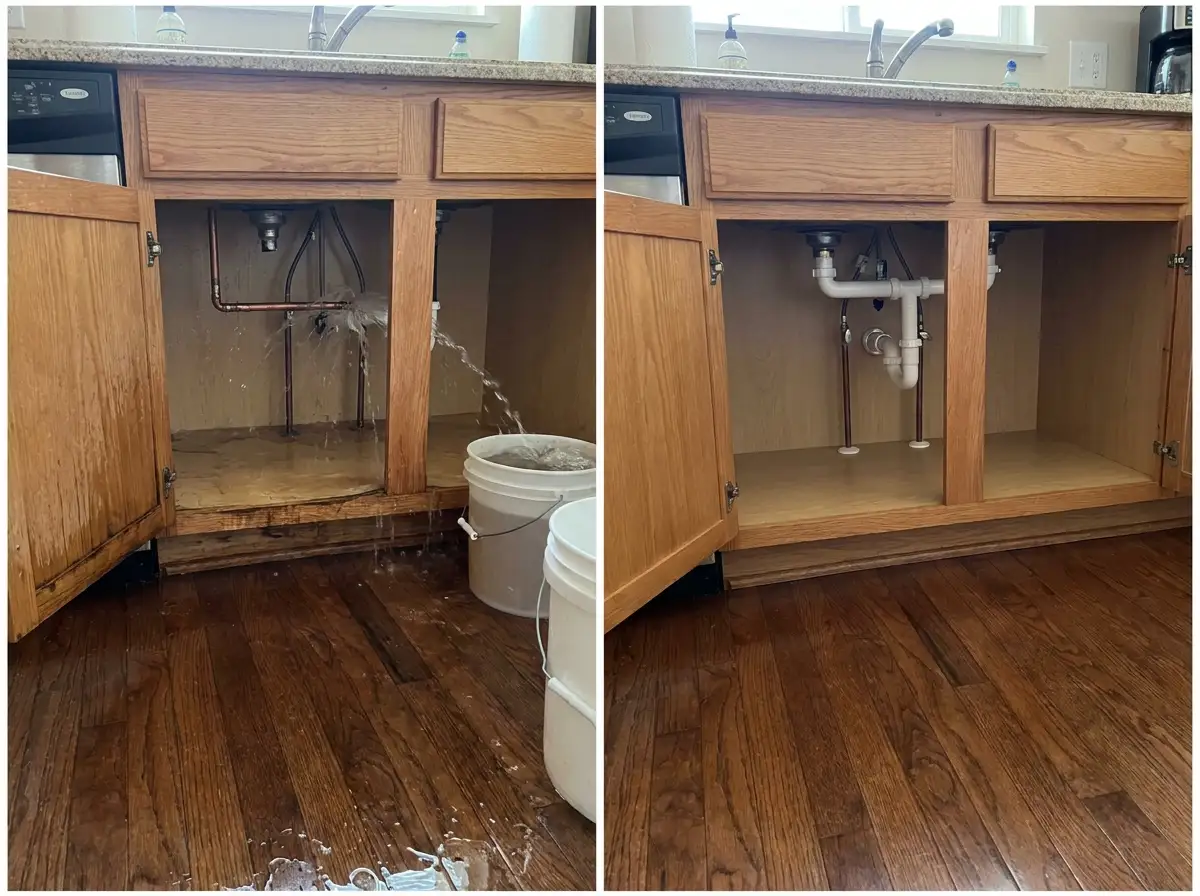
A burst pipe needs two things: a plumber to fix the pipe, and a restoration crew to handle the water damage inside your walls. Water Restoration Pros is the second call. We extract, dry, and document everything your insurance needs — on-site within 60 minutes, any hour of the day.
Not every pipe burst announces itself with gushing water. Many start slowly inside a wall. Here is what to watch for:
Water moves inside walls long before you see it. By the time a stain appears on the surface, the hidden damage behind it is usually far larger. We use moisture meters and thermal imaging to map what the eye cannot find.
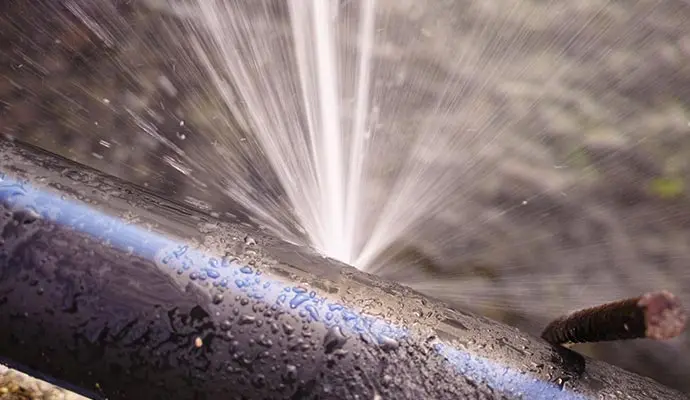
Burst pipe flooding your home right now?
Our Everett crew is ready — 60-minute arrival, any hour.
Every minute the water runs increases the scope of the cleanup. These six steps, done in order, limit the damage before help arrives.
Usually near the front foundation wall, in a utility room, or near the water meter outside. Turn clockwise until it stops.
Once the main is closed, the water heater can overheat. Gas: turn to pilot. Electric: shut the circuit breaker.
Open cold taps at the lowest level of the home. This drains residual water pressure from the pipes and stops more water from pushing out of the break.
Date-stamped photos taken before cleanup are required for most insurance claims. Do not move furniture or pull up carpet first.
Water near outlets or the electrical panel is a shock hazard. Shut the circuit breaker for the affected area if you can do it safely.
The sooner we start extracting and drying, the less of your flooring, drywall, and framing has to be replaced. (425) 433-9550
This is the part most Everett homeowners do not know until they are dealing with it: this type of job requires two separate contractors.
Find the failure, repair or replace the pipe, restore water pressure. The pipe repair typically costs $300 to $600 for an accessible section, or $800 to $2,500 when wall access is needed.
Extract the water, dry inside the walls and subfloor, remove ruined material, and document everything for your insurance claim. This is the larger bill, and it is the one your homeowners insurance covers.
A 1/8-inch crack in a pressurized pipe releases 250 gallons of water per day. According to restoration cost data, the pipe repair is typically 5 to 10% of the total cost. The cleanup is the other 90%.
Call Before the Plumber FinishesWorried about hidden water damage in your walls?
We find moisture behind walls and under floors before mold starts.
Most pipe failures in Everett are not accidents. They are the result of pipes that have been degrading quietly for years.
More than a third of Everett homes predate 1970, based on U.S. Census housing data. Homes built before that era were typically plumbed with galvanized steel pipes. Galvanized steel corrodes from the inside outward — you cannot see it happening. The buildup restricts flow, drops water pressure, and eventually weakens the pipe wall until a fitting fails without warning. A single burst on a galvanized fitting often means the rest of the system is under the same stress.
According to Policygenius, more insurers now require plumbing inspections on older homes before issuing or renewing policies. If your home was built before 1970 and still has original plumbing, this risk is worth knowing about.
The Seattle metro area averages around 60 days per year with freezing temperatures. January and February are the highest-risk months. When water inside a pipe freezes, it expands by about 9%, building pressure until the pipe cracks or a joint separates. A 1/8-inch crack in a pressurized pipe releases 250 gallons of water per day — that much water running inside a wall while you sleep is what turns a small repair into a large claim.
The freeze risk is highest in pipes along exterior walls, in uninsulated crawl spaces, and in any room that loses heat quickly during a cold snap. Other causes in Everett homes include water hammer stress on pipe joints, tree root intrusion on older supply lines, and aging appliance hoses and connections.
Water from a failed pipe is almost always clean water — Category 1 in restoration terms. That means no decontamination step, but it does involve opening walls to reach hidden moisture.
We arrive with moisture meters and a thermal imaging camera to map every wet area, including inside walls, beneath flooring, and in the subfloor. We photograph the full scope for your insurance claim.
Industrial extractors pull out visible water from floors, carpet, and subfloor. This typically takes one to four hours depending on volume.
When the moisture map shows saturation inside a wall cavity, we open the drywall to expose wet framing and insulation. In some cases, injectidry systems push dry air directly into the wall cavity without cutting.
Industrial air movers and dehumidifiers run until all material readings meet the ANSI/IICRC S500 dry standard. Burst pipe events in a finished space typically dry in 5 to 7 days.
We hand you a complete moisture log, drying record, and photo set formatted for your adjuster. We bill your insurer directly. Once dry, rebuild work brings your home back exactly as it was.
Ready to restore your Everett home?
One call covers extraction, drying, repairs, and full insurance documentation.
The good news: homeowners insurance almost always covers a burst pipe. The Washington State Insurance Commissioner confirms that policies cover sudden and accidental discharge from a plumbing system.
Your insurance covers the water damage cleanup: extraction, structural drying, material removal, mold prevention treatment, and finish restoration like new drywall and flooring. The cost of accessing the pipe, like cutting through drywall, is usually covered too, based on Washington homeowner policy guidance.
Washington homeowner insurance standards generally require the home to stay at around 55°F. If the home was vacant and unheated during a freeze and the pipe bursts, the claim can be denied. Keep the heat on through January and February.
The pipe repair itself is almost never covered. Insurance covers what the water damaged, not the plumbing that failed. Full repiping of an older home, which runs $4,000 to $15,000, is also excluded. Slow, gradual leaks from poor maintenance are excluded as well.
A burst attributed to corrosion or long-term neglect rather than a sudden event can be denied. According to Policygenius, galvanized and polybutylene pipes are specifically flagged as high-risk by insurers. The best protection is documenting the sudden nature of the event clearly — we know how to frame the documentation.
We Document the Loss & Guide Your ClaimThe pipe repair is a small fraction of the total cost. The water damage cleanup — the part insurance covers — is the real expense.
| Scenario | Pipe Repair Cost | Cleanup Cost (insurance-covered) |
|---|---|---|
| Accessible pipe, minor water | $300 to $600 | $1,000 to $3,000 |
| Pipe inside wall, contained | $800 to $2,500 | $2,000 to $8,000 |
| Pipe ran several hours unnoticed | $300 to $2,500 | $5,000 to $20,000+ |
Shutting off the water fast and calling for extraction immediately keeps the cleanup cost at the low end. Every hour the water runs adds to the scope.
Want a full quote with repairs included?
Free same-day assessment — we document and bill your insurer directly.
We cover all of Everett, including zip codes 98201, 98203, and 98208. The neighborhoods with the oldest housing stock — Northwest Everett, Bayside, and Port Gardner — have the highest concentration of pre-1940 homes with original galvanized plumbing still in service.
Close the main water shutoff immediately to stop the flow. Then turn off the water heater, open cold taps to drain remaining pressure, photograph the damage, and call a restoration crew. Every minute the water runs adds to the cleanup scope and cost.
Yes, in most cases. A sudden, accidental pipe burst is a covered event under standard Washington homeowners insurance. Your policy covers the water damage cleanup: extraction, drying, material replacement, and finish restoration. It does not cover the pipe repair itself.
Most policies cover the water damage cleanup but not the failed pipe itself. Insurance pays for the restoration: drying, replacing soaked drywall and insulation, mold prevention, and finish repairs. The plumber bill typically runs $300 to $2,500 and is usually a separate out-of-pocket cost.
Usually yes, provided the home was reasonably heated at the time. Washington policies require the home to stay at around 55°F. If the home was vacant and unheated during a freeze event, coverage can be denied. Keep the heat running through January and February, the highest-risk freeze months in Everett.
Water damage cleanup after a pipe event runs $1,000 to $20,000 or more, depending on how long the water ran and what it reached. The pipe repair itself costs $300 to $2,500 separately. Homeowners insurance covers the cleanup cost for most sudden burst events, so you typically pay only your deductible.
Most pipe water damage events in a finished space dry in 5 to 7 days with professional equipment. Pipes inside walls that soaked framing and subfloor may take longer. We monitor with moisture meters every day and keep equipment running until all readings meet the IICRC dry standard.
Watch for unexplained water stains or soft spots on walls or ceilings, low water pressure without a reason, the sound of running water when nothing is on, or a sudden jump in your water bill. Rust-colored tap water is a sign of galvanized corrosion. By the time a stain appears, the hidden damage behind it is usually already significant.
The plumber repairs the broken pipe. The restoration crew handles the water damage: extracting standing water, drying inside the walls, removing ruined drywall and insulation, and documenting the loss for your insurance claim. These are two different services with two separate bills and sometimes two separate insurance processes.
Yes. Over a third of Everett homes predate 1970. Galvanized steel pipes corrode from the inside over decades, and by the time water pressure drops or water discolors, the pipe wall is already compromised. A burst in one galvanized fitting often means the full system needs evaluation. Some insurers now require plumbing inspections on older homes before renewing a policy.
Full restoration includes moisture mapping, extracting standing water, opening walls where needed to access hidden moisture, structural drying, mold prevention treatment, a complete insurance documentation package, and rebuild work like new drywall, flooring, and paint. Your home returns to its pre-loss condition, not just water-free.
Still have questions about burst pipe cleanup?
Our Everett team is live right now — no bots, no hold music.
Our IICRC-certified crew is ready 24/7. We respond in 60 minutes — nights, weekends, and holidays.
(425) 433-9550