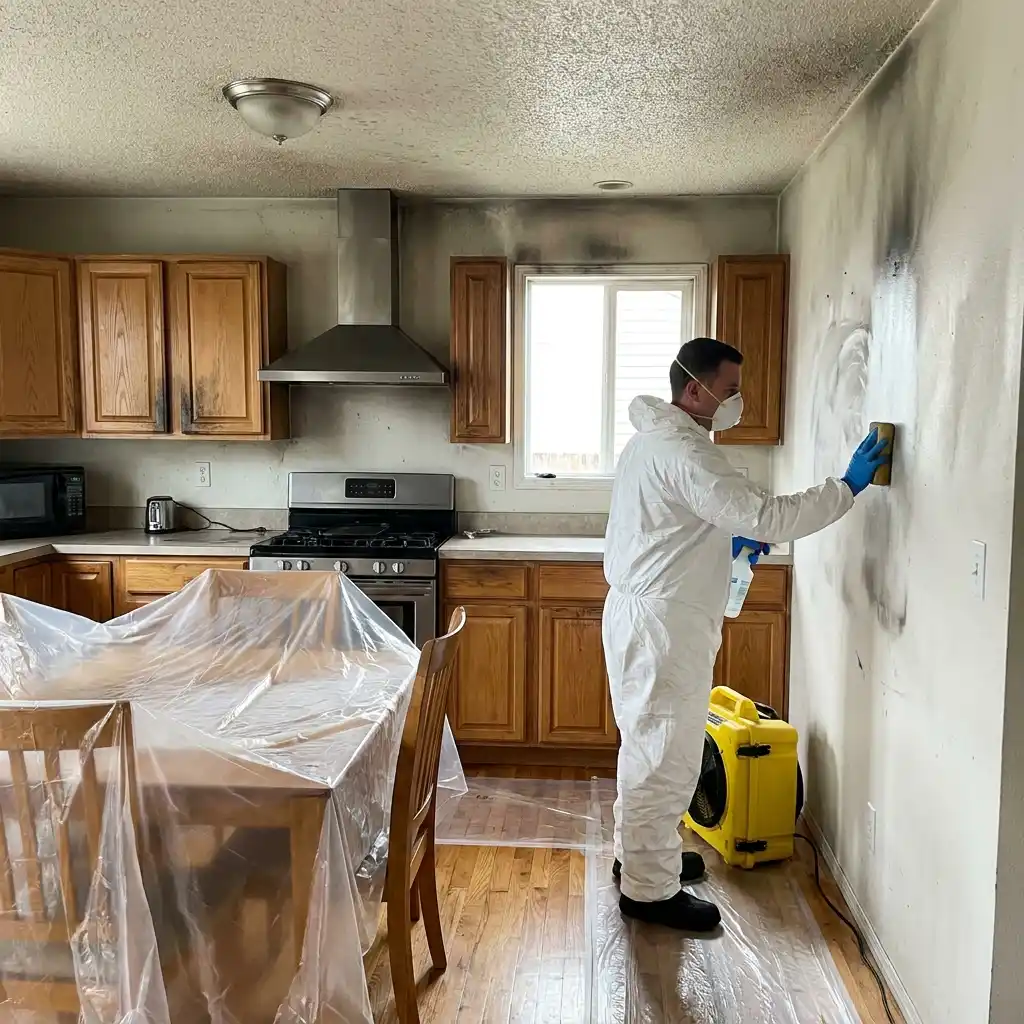
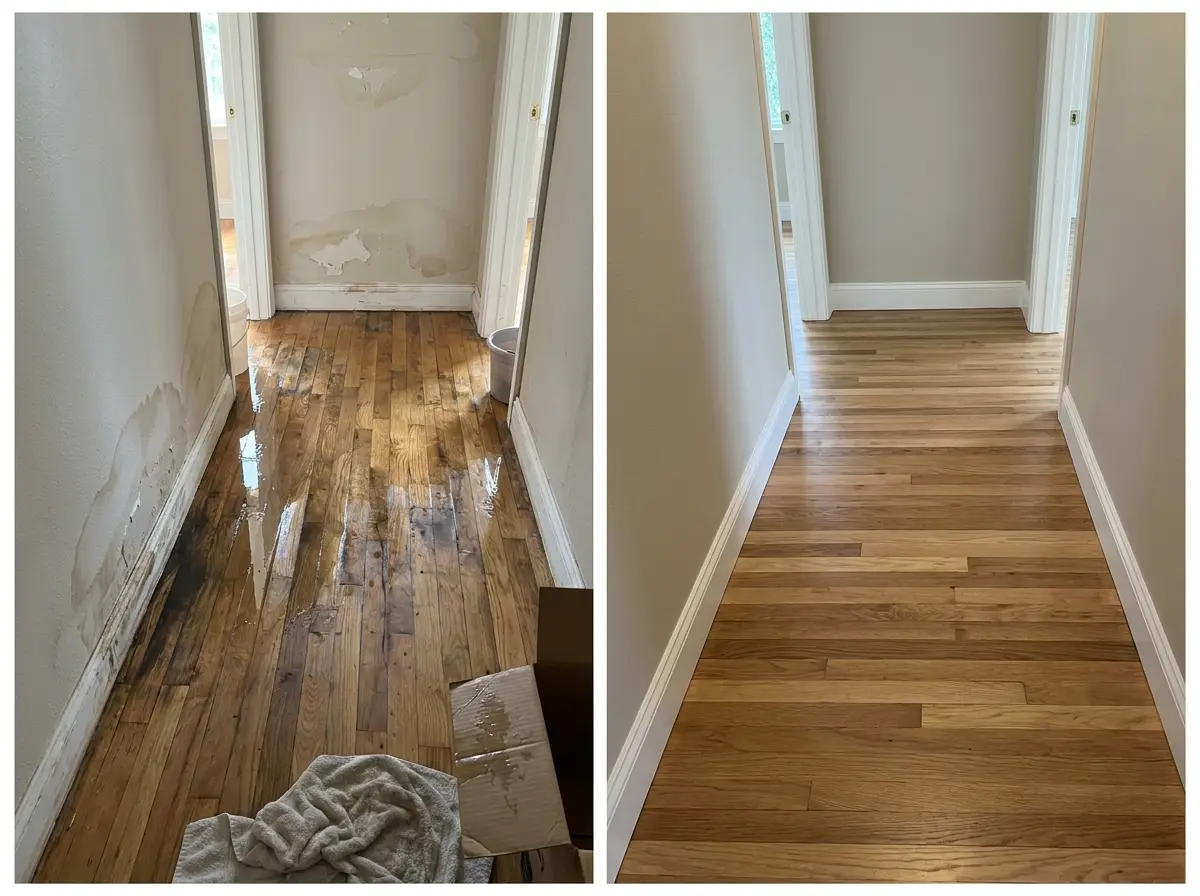
A house fire leaves three problems at once: heat and structural damage, smoke and soot that keep spreading, and the thousands of gallons of water firefighters used, now sitting inside your walls. Water Restoration Pros handles all three. We are IICRC-certified, local to Everett since 2021, and on-site within 60 minutes.
Soot bonds to surfaces within 48 hours, and the documentation you submit in the first 72 hours shapes your entire insurance claim. Every hour matters. Call now, not tomorrow.
A fire does not wait for business hours, so neither do we. Water Restoration Pros answers live any hour of the day, including during the emergency itself. Our local Everett crew arrives within 60 minutes and goes to work on four things right away.
Most homeowners do not realize that securing the property comes before any cleanup. If rain gets in through a fire-damaged roof, the damage compounds fast. That is why board-up is the first job, not the last.
Fire damage in your Everett home?
Our crew is ready — same-day response, smoke and soot assessment.
We are based in Everett and have served Snohomish County since 2021. When you call, you reach a local crew that knows this area, not a national hotline that routes your emergency out of state.
Here is what sets us apart from other fire restoration companies:
Every fire leaves water behind. Other fire companies call a separate crew to extract it. We already are that crew, because water damage is our core work.
We know Everett older homes and how fire and smoke move through them.
Water and fire restoration is what we do, not general remodeling.
We document the loss to the standard adjusters expect and bill your insurer directly.
Our technicians follow the IICRC standards for fire, smoke, and water restoration.
The steps you take in the first few hours shape how hard the restoration will be. Follow these in order.
Fire can leave floors, ceilings, and wiring unsafe. Wait for the fire department to tell you re-entry is safe. Do not assume it is safe just because the fire is out.
Report the fire right away. The 72-hour documentation window starts now, and what you submit in the first three days shapes the whole claim.
Do not wait until morning. Weather entering through fire-damaged windows and roof makes the damage worse overnight. Board-up can happen the same night.
Wiping soot smears it and sets it into the surface permanently. Do not run your HVAC, since it spreads smoke particles through the whole house. Do not throw anything away before it is documented.
Every room, every surface, every damaged item. The adjuster needs pre-cleanup photos. We do this systematically, and your own photos help too.
One call covers board-up, water extraction, soot removal, odor treatment, structural drying, and the full insurance documentation package.
Worried smoke and soot have spread further than you can see?
We assess every hidden area before smoke odor and soot become permanent.
A house fire does not leave one kind of damage. It leaves three, all at once, and all getting worse while you wait.
Flames char structural materials, and heat weakens framing and drywall well beyond the visible burn marks. Materials near the fire zone can be compromised even if they never caught fire. A structural assessment has to come before any restoration begins, so we know what is sound and what has to be replaced.
Smoke travels through HVAC systems, wall cavities, and attic spaces, dropping soot in rooms far from where the fire started. Soot is acidic โ it etches glass, corrodes metal, and permanently stains porous surfaces within 24 to 48 hours. There are three kinds of residue, and each needs a different method: dry soot from fast fires, oily soot from synthetic materials, and protein residue from kitchen fires that smears if wiped wrong.
Putting out a fire leaves thousands of gallons of water inside the structure. That is a water damage event happening at the same time as the fire damage, and in Everett's damp climate, mold can start within 24 to 48 hours. Extracting water and preventing mold is our core work. Everett's persistent humidity means suppression water does not dry on its own, so professional extraction in the first day is a requirement, not an option.
Soot is not just dirt. It is chemically active, and every hour it sits it reacts with the surfaces of your home, making the restoration harder and more expensive. This is why you should call right away, even after a small fire.
On metal surfaces like fixtures, appliances, and electronics, the acidity in soot starts corroding within hours. Glass etching begins within days. Porous materials like drywall, wood, and fabric absorb soot and lock it in permanently if it is not treated within 48 to 72 hours. After that, many items have to be replaced instead of cleaned.
Dry soot from a fast-burning fire is powdery and easier to remove. Oily soot from slow or synthetic fires bonds to surfaces and smears with the wrong technique. Protein residue from a kitchen fire is a nearly invisible film that is extremely pungent and smears if wiped with standard products. Using the wrong method on any of these makes the damage worse, which is why professional assessment comes first.
Smoke particles embed deep in porous materials. Surface cleaning masks the smell for a while, but if the source material inside walls, ductwork, and subfloor is not treated, the odor returns when heat and humidity rise. In Everett's damp climate this is common. We treat the odor at its source with thermal fogging or ozone treatment, which neutralizes the particles deep inside the material rather than covering the smell.
Fire restoration is the most involved job we do, because it combines fire, smoke, and water work. Every job follows the same six steps.
In the first hour, we board windows and doors and tarp the roof. This stops weather from entering and secures the property before any cleanup starts.
We check the structure and electrical safety. In homes built before 1980, we arrange the asbestos and lead testing that Washington State law requires before any demolition. This step cannot be skipped in older Everett homes.
Industrial extractors remove the firefighting water from floors, walls, and subfloor, and drying equipment goes in immediately. This is the water damage event inside the fire, and handling it fast prevents mold.
We assess each room and identify the soot type. We dry sponge and HEPA vacuum to lift loose carbon before any wet cleaning, since disturbing soot without a vacuum spreads it. Each surface gets the method that matches its material and soot type.
Thermal fogging or ozone treatment penetrates porous materials and neutralizes the smoke odor at its source. We clean the air ducts so the HVAC system does not spread smoke particles and recontaminate the home.
We determine what can be saved and what must be replaced, then prepare a full photo and measurement record for your insurance. Once the structure is sound and clean, we coordinate the rebuild.
Ready to restore your Everett home after fire damage?
One call covers soot removal, deodorizing, drying, and full insurance documentation.
Here is the good news after a hard day: fire damage is almost always covered. Unlike flooding, fire is a covered peril under nearly every standard homeowners policy in Washington. The fire, the smoke, and the firefighting water are usually all part of the same claim.
A standard policy covers fire and smoke damage to the structure, your contents like furniture and clothing and electronics, the water damage from firefighting, debris removal, and additional living expenses if you cannot stay in the home during repairs. Most Everett homeowners find the bulk of the restoration is covered, minus their deductible.
What you submit in the first 72 hours sets the tone for the whole claim. Adjusters use early documentation to set the initial value, so it pays to get it right. We photograph every room, surface, and item before touching anything, and we build the record to the standard adjusters expect.
Coverage can be limited for intentional fire, for homes left vacant long-term, or for deferred maintenance that contributed to the fire spreading. If you are unsure about your policy, we can help you understand what applies before the claim is filed.
We prepare the full documentation package and bill your insurer directly when possible, so you handle only your deductible. We coordinate with the adjuster throughout.
Fire restoration cost depends on how far the damage spread and how much of the home needs rebuilding. Based on local cost data, here is a rough guide for Everett:
| Fire scope | Typical cost | What drives it |
|---|---|---|
| Smoke and soot only | $3,000 to $12,000 | Size of spread, soot type |
| Contained room fire | $12,000 to $40,000 | Structural repair plus soot |
| Multi-room fire | $40,000 to $100,000 | Rebuild scope, water damage |
| Major structural loss | $100,000 to $290,000+ | Full or partial rebuild |
What pushes the cost up: how far the smoke traveled, the soot type (protein residue is the hardest and most expensive), whether asbestos or lead testing is required in a pre-1980 home, how much firefighting water was used, and how quickly the restoration started. Most of these costs are covered by insurance, and we document to the standard that gets claims approved.
Want a full quote with fire repairs and deodorizing included?
Free same-day assessment — we document and bill your insurer directly.
Three building factors specific to Everett's housing stock change how fire restoration is done.
Much of Everett was built between 1950 and 1985 using balloon framing, which has no horizontal fire blocking between floors. Smoke travels straight up through wall cavities โ often showing up two floors above where the fire started. We check far beyond the fire room.
Homes built in the 1960s and 1970s frequently have aluminum wiring, which oxidizes at connections and generates heat over time. It is a leading electrical fire cause in older Everett homes. During restoration, connections often need to be upgraded to current code before reoccupancy.
Washington State law requires testing before any demolition in homes built before 1980. Fire restoration in older Everett homes cannot begin tearing out drywall, insulation, or flooring until testing is complete. We arrange it as part of the job.
Eastern Everett neighborhoods border the Cascade foothills. Summer wildfire smoke can infiltrate homes through ventilation โ different from structural fire damage, but the same HVAC cleaning and odor treatment apply.
We cover all of Everett, including zip codes 98201, 98203, and 98208. The neighborhoods with the oldest homes, like central Everett, Northwest Everett, Bayside, and Port Gardner, have the most pre-1980 houses with balloon-frame construction, aluminum wiring, and possible asbestos. These are the homes where fire restoration is most complex, and where knowing the local building history matters most.
Beyond Everett, we serve Marysville, Mukilteo, Lake Stevens, Mill Creek, Lynnwood, Snohomish, Bothell, and Edmonds across Snohomish County.
Highest concentration of pre-1980 homes with balloon-frame construction, aluminum wiring, and asbestos risk.
Pre-1970 housing stock with the most complex fire restoration requirements in the city.
Older homes near the waterfront โ fire restoration complicated by historic building materials.
Salt air, older roofing, and pre-1980 construction make fire and smoke damage harder to assess.
Still have questions about fire damage restoration?
Our Everett team is live right now — no bots, no hold music.
Our IICRC-certified crew is ready 24/7. We respond in 60 minutes โ nights, weekends, and holidays.
(425) 433-9550