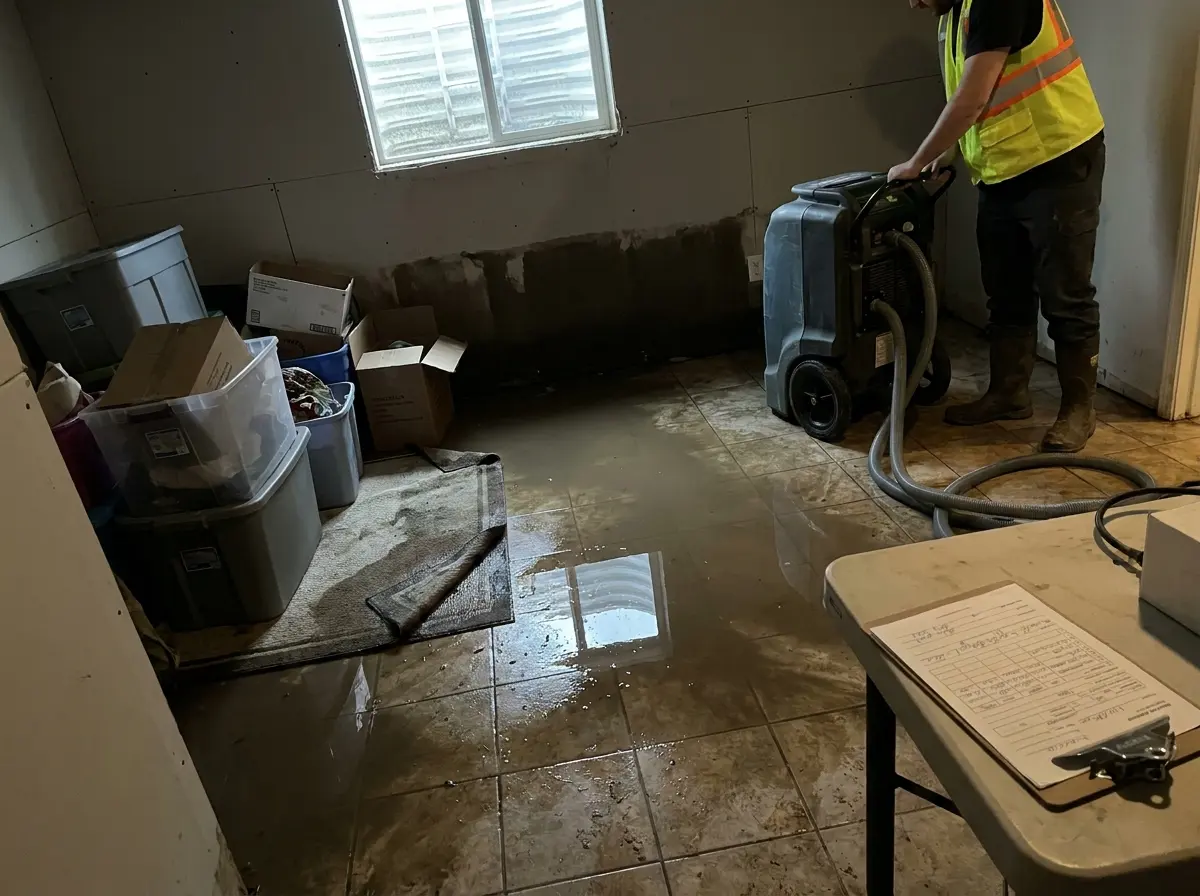
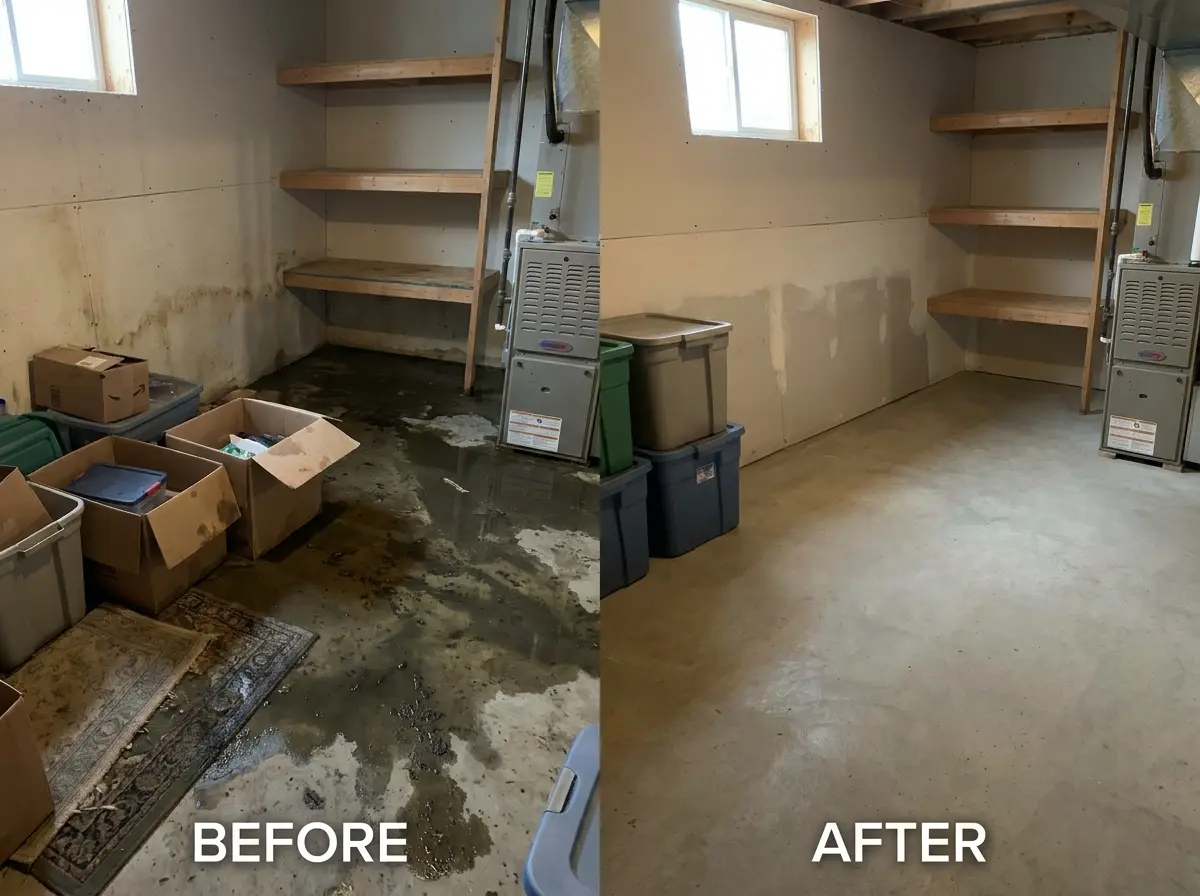
Where the water came from changes everything: what the cleanup costs, what your insurance pays, and whether it happens again. Water Restoration Pros handles all four causes of basement flooding in Everett, from sump pump failure to foundation seepage, with extraction equipment on-site within 60 minutes.
Basements are not like the rest of the house. They stay cooler, hold moisture far longer, and often have finished materials that trap water above the waterline. Drying a basement properly is a different job than drying an upstairs room, and doing it wrong leaves moisture behind the walls.
A flooding basement cannot wait. Water Restoration Pros answers live any hour of the day, including nights, weekends, and during the storms that cause the flooding. Our local Everett crew arrives within 60 minutes with truck-mounted extraction equipment, ready to pump out the water safely and start drying before the damage spreads through your floors and walls.
We are based right here in Everett and have served Snohomish County since 2021. When you call, you reach a local crew that knows our wet climate, our high water table, and how our older basements flood, not a national call center that routes your emergency out of state.
Basement flooding right now?
Our Everett crew is ready — 60-minute arrival, any hour.
A flooded basement carries a safety risk that upstairs rooms do not: the water can reach outlets, the electrical panel, and gas appliances that sit below grade. A few steps protect you before the crew arrives.
Do not enter a flooded basement if the water may be touching outlets or the electrical panel, or if the water is at or above panel height. Water conducts electricity, and the shock risk is real. If a sewer line backed up, the water is contaminated and carries a health hazard too. When in doubt, stay at the top of the stairs until a professional checks the entry conditions.
If you can do so safely, follow these steps in order:
Shut off the power to the basement at the breaker before stepping into any standing water. Do not run a household shop vac in standing water.
Stop the water source if you can reach it safely, such as a sump discharge or a shutoff valve.
Move belongings off the floor if the water is still rising and it is safe to reach them.
Photograph everything before cleanup begins. Insurers require it. Do not move or remove anything before documenting the full extent of the damage.
Call for professional extraction rather than pumping it out yourself. Pumping a flooded basement too fast can crack foundation walls when the surrounding soil is still saturated.
This is the mistake that turns a flooded basement into a structural repair. When you pump a basement out quickly while the surrounding soil is still soaked, the pressure outside the walls becomes far greater than inside. According to restoration guidance, that difference can crack or collapse foundation walls. Professionals remove the water in stages to keep the pressure balanced. This alone is a strong reason not to rent a pump and go it alone.
Almost every flooded basement traces back to one of four sources. The source matters, because it decides how we clean up, what your insurance covers, and whether the water will return.
During long rain events, a sump pump can run for days without a break. Power outages, worn-out motors, stuck float switches, and simply being overwhelmed by inflow all cause failure. The water pours in because the one thing keeping it out stopped working. This is the most common basement flooding we see in Everett, and it comes with the most confusing insurance situation, which is covered further down this page.
When the soil around your foundation gets fully soaked, it presses water against the walls. This pressure pushes moisture through cinder block, poured concrete, and the seam where the wall meets the floor. In low-lying Everett areas near the Snohomish River, like Riverside and Bayside, the groundwater table rises through the wet season and presses up against basement floors for months. Seepage is a slow, ongoing problem, and standard homeowners insurance usually does not cover it.
A burst pipe or an appliance leak on the main floor can drain straight down into the basement. This is clean water, and because it is a sudden, accidental event, homeowners insurance normally covers it. This source is treated very differently from groundwater or a failed pump.
Heavy rain overwhelms the city storm drains, and water backs up through floor drains, window wells, and basement doors. This is common during the atmospheric river storms that hit Everett from October through March. Whether it is covered depends on if you carry a water backup endorsement on your policy.
Worried hidden moisture is lurking in your basement?
We find moisture behind walls and under slabs before mold starts.
Mold can begin within 24 to 48 hours of water damage anywhere in a home. Basements are worse. They stay cooler, get less airflow, and hold more humidity than the rest of the house, which makes them the fastest place for mold to take hold in an Everett home. Finished materials like drywall and carpet trap moisture behind the surface, so the mold is often growing out of sight for weeks before it shows. Our thermal imaging finds that hidden moisture before it spreads.
Basement flooding has the most complicated insurance picture of any water damage event, because the coverage depends entirely on the cause. Here is how each of the four sources is treated.
This is the fact most homeowners learn too late: a standard policy does not cover water damage from a failed pump. You need a separate sump pump rider, also called a water backup endorsement, which runs about $50 to $100 a year. Even with the rider, the adjuster will inspect whether the pump was maintained. A pump that was never tested and then failed can lead to a denied claim. Keeping maintenance records protects your coverage.
Slow seepage from water pressure or a rising water table is treated as a maintenance issue, not a sudden accident, so standard policies exclude it. Sealing and waterproofing the foundation is the homeowner responsibility. This is why the source of the water matters so much for your claim.
If your basement flooded because a pipe or appliance above it failed, that is a sudden, accidental event, and homeowners insurance normally covers it. Our burst pipe cleanup page explains that coverage in full.
Water that backs up through a floor drain or enters through a window well is not covered by a standard policy. A water backup endorsement is required. AAA guidance recommends at least $10,000 of coverage for an unfinished basement and $20,000 for a finished one.
For events that are covered, we prepare the moisture logs, photos, material records, and drying reports your adjuster needs, and we bill directly when the policy allows.
Not Sure If You’re Covered? Call Us FirstWant a full quote with mold prevention and repairs included?
Free same-day assessment — we document and bill your insurer directly.
The cost of a basement cleanup comes down to one thing first: finished or unfinished. Here is how the two tracks compare by phase.
| Cleanup Phase | Unfinished Basement | Finished Basement |
|---|---|---|
| Water extraction | $300 to $800 | $500 to $1,500 |
| Material removal | Minimal | $1,500 to $5,000 |
| Structural drying | $500 to $1,500 | $1,000 to $3,000 |
| Rebuild | Minimal | $3,000 to $20,000+ |
| Typical total | $500 to $3,000 | $5,000 to $30,000+ |
What pushes the cost up: a pump failure that ran unnoticed overnight, a finished space with materials to remove, whether mold had time to start, and the size of the basement. Water damage restoration averages $3 to $8 per square foot nationally, with finished basement work landing at the higher end because of the material removal and rebuild.
Every basement job follows the same five steps, built around the below-grade challenges that make basement drying different from the rest of the house.
We do not empty a flooded basement all at once when the soil outside is still saturated. We stage the extraction so the pressure on the foundation walls stays balanced. This is the step do-it-yourself pump rentals get wrong, and the one that can crack a foundation.
In a finished basement, we cut drywall 12 inches above the waterline, pull wet insulation, and remove saturated carpet and pad before drying begins. Drying behind intact drywall traps moisture and grows mold, so removal comes first. We log every material we remove for your insurance claim.
After removal, extractors pull remaining moisture out of the concrete floor and any subfloor assemblies. Concrete wicks and holds water, so this step matters more in a basement than upstairs.
Basements stay cooler and have less air movement, so they dry more slowly. We position air movers and dehumidifiers for below-grade conditions and run them until every reading meets the ANSI/IICRC S500 dry standard. A basement usually takes 5 to 10 days, compared to 3 to 5 days for an upstairs room. We check the readings daily.
You get a full moisture log and photo record formatted for your adjuster. We bill your insurer directly when your policy allows. Once the space is certified dry, the rebuild puts it back together with new drywall, insulation, and flooring.
Ready to restore your Everett basement?
One call covers extraction, drying, and full insurance documentation.
Cleanup handles the flood you have. These steps reduce the chance of the next one, especially through Everett wet season.
A pump only helps if it works when you need it. Keep it ready with a simple routine:
Power outages happen during the same storms that fill your basement, and a standard pump runs on house current. When the power drops, the pump stops at the exact moment you need it most. A battery backup system costs $200 to $500 installed and keeps the pump running for 8 to 12 hours without power. In Everett, where storms and outages arrive together, it is worth the cost.
October through March is Everett wet season, when pumps work hardest and basements flood most. The record December 2025 storms showed what weeks of sustained rain do to local drainage. Inspect your pump before October and again in January.
For chronic foundation seepage, the long-term fix is exterior waterproofing or an interior French drain, not restoration. We restore basements after they flood. For preventing seepage in the first place, a foundation waterproofing contractor is the right call. We would rather tell you that plainly than sell you the wrong service.
The first thing that determines the size of a basement cleanup is whether the space is finished. It is the single biggest factor in the cost and the timeline.
Unfinished basements have bare concrete floors and exposed walls. Water can be extracted and the concrete dried without tearing much out. Most unfinished basement cleanups run $500 to $3,000.
Finished basements have drywall, insulation, carpet or vinyl plank flooring, and sometimes a dropped ceiling and cabinets. These materials soak up water and usually have to be removed before drying can work. Finished basement cleanups typically run $5,000 to $30,000 or more.
The waterline is not the removal line. Drywall pulls water upward by wicking, well above the visible waterline. Standard practice is to cut the drywall at least 12 inches above the highest water mark to reach the wet framing behind it. Many homeowners are surprised that three inches of water on the floor can require drywall removal 15 inches up the wall. Trying to dry behind intact drywall traps moisture and grows mold.
We cover all of Everett, including zip codes 98201, 98203, and 98208. In Riverside, Bayside, and Port Gardner, the Snohomish River keeps the water table high through the wet months, so basements in these neighborhoods face steady water pressure from October through March, not just during single storms. We know these homes and how they flood.
Beyond Everett, we serve Marysville, Mukilteo, Lake Stevens, Mill Creek, Lynnwood, Snohomish, Bothell, and Edmonds. The city of Snohomish sits in the same river watershed and faces similar water table pressure.
Do not enter if water may be near outlets or the electrical panel. Shut the breaker first. Stop the water source if you can, avoid using a shop vac in standing water, and photograph the damage before touching anything. Then call for professional extraction. Pumping a basement out too fast can crack foundation walls if the soil outside is still saturated.
Only if you can confirm the power is off and the water is not contaminated. Standing water touching live outlets is a serious shock hazard, and a sewer backup adds a health risk. If you cannot be sure the panel and outlets are clear of water, stay out and wait for a professional to check the entry conditions first.
No, not under a standard policy. Sump pump failure requires a separate endorsement called a sump pump rider, usually $50 to $100 per year. Even with the rider, the adjuster checks whether the pump was maintained. A pump that was never tested and then failed can lead to a denied claim, so keep your maintenance records.
No. Slow seepage from water pressure or a rising water table is treated as a maintenance issue, not a sudden accident, so standard policies exclude it. Sealing and waterproofing the foundation is the homeowner responsibility. If a covered event like a burst pipe drains into the basement, that portion of the damage may be covered.
Unfinished basements usually run $500 to $3,000. Finished basements cost much more, from $5,000 to $30,000 or higher, because carpet, drywall, and insulation must be removed before drying can begin. How long the water sat and the size of the basement are the biggest factors in the final price.
A finished basement has carpet, drywall, and insulation that soak up water and usually must be removed before drying. Drywall is cut 12 inches above the waterline because water wicks upward. This material removal adds labor, time, and cost. An unfinished basement has bare concrete and far fewer materials to deal with.
Mold can begin within 24 to 48 hours. Basements are worse than upstairs rooms because they stay cooler, get less airflow, and hold more humidity. Finished materials trap moisture behind the surface, so mold often grows out of sight for weeks. Fast professional extraction and drying is the best way to prevent it.
Recurring flooding usually points to a sump pump that cannot keep up, or water pressure from a saturated water table. Homes in low-lying areas near the Snohomish River face a high water table through the wet season. Cleanup removes the water, but the lasting fix is a pump upgrade, a battery backup, or foundation waterproofing.
For a small amount of clean water in an unfinished basement, a wet vac and fans can work. Any finished basement, any contaminated water, or water that sat for hours needs professional equipment. Industrial dryers are far more powerful, and the moisture log they produce is what your insurer requires to approve a claim.
Basements dry more slowly than upstairs rooms because they stay cooler with less airflow. Extraction and drying usually takes 5 to 10 days with professional equipment, compared to 3 to 5 days upstairs. A finished basement that needs material removal takes longer and requires a rebuild phase after the space is dry.
Still have questions about basement flooding?
Our Everett team is live right now — no bots, no hold music.
Our IICRC-certified crew is ready 24/7. We respond in 60 minutes — nights, weekends, and holidays.
(425) 433-9550