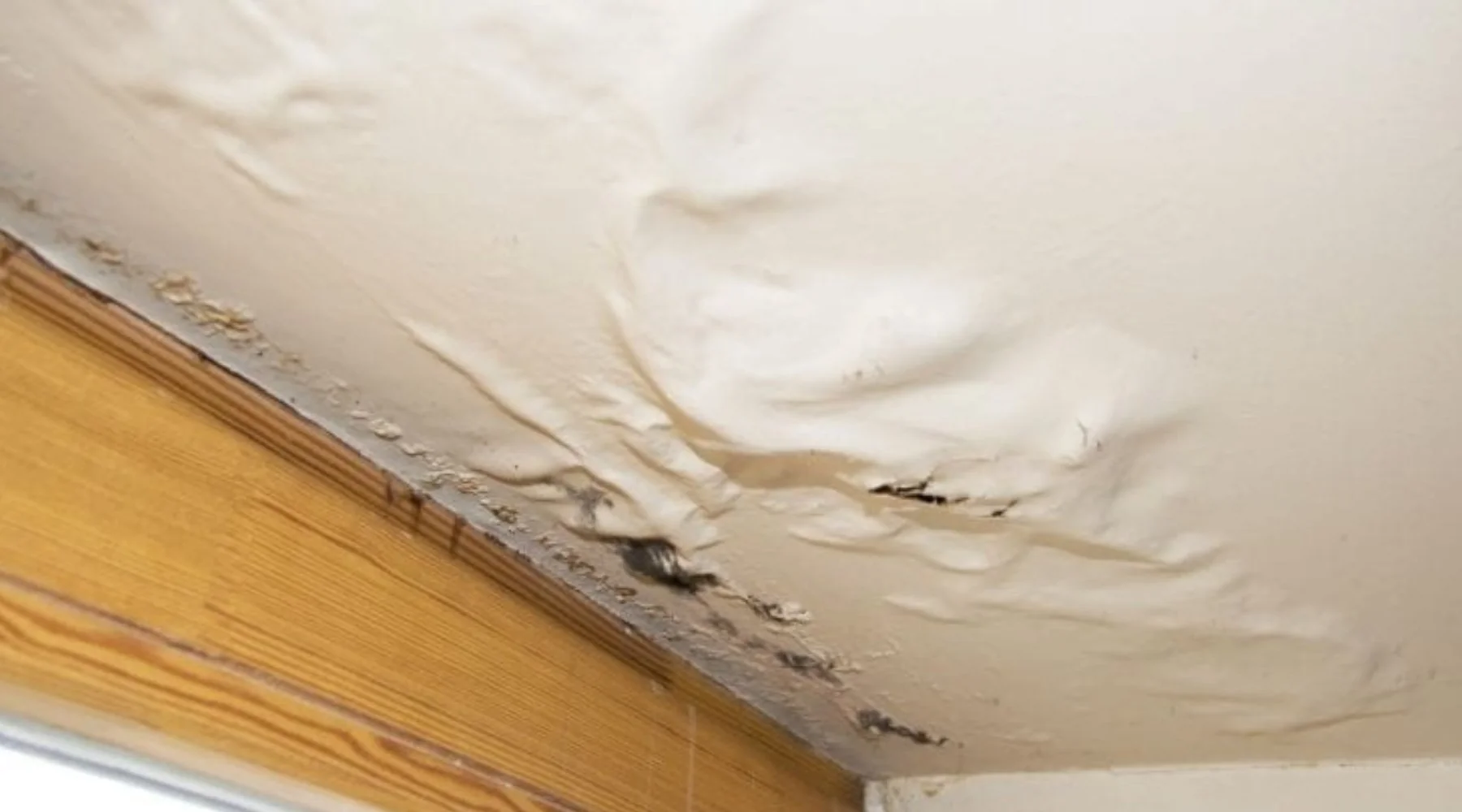
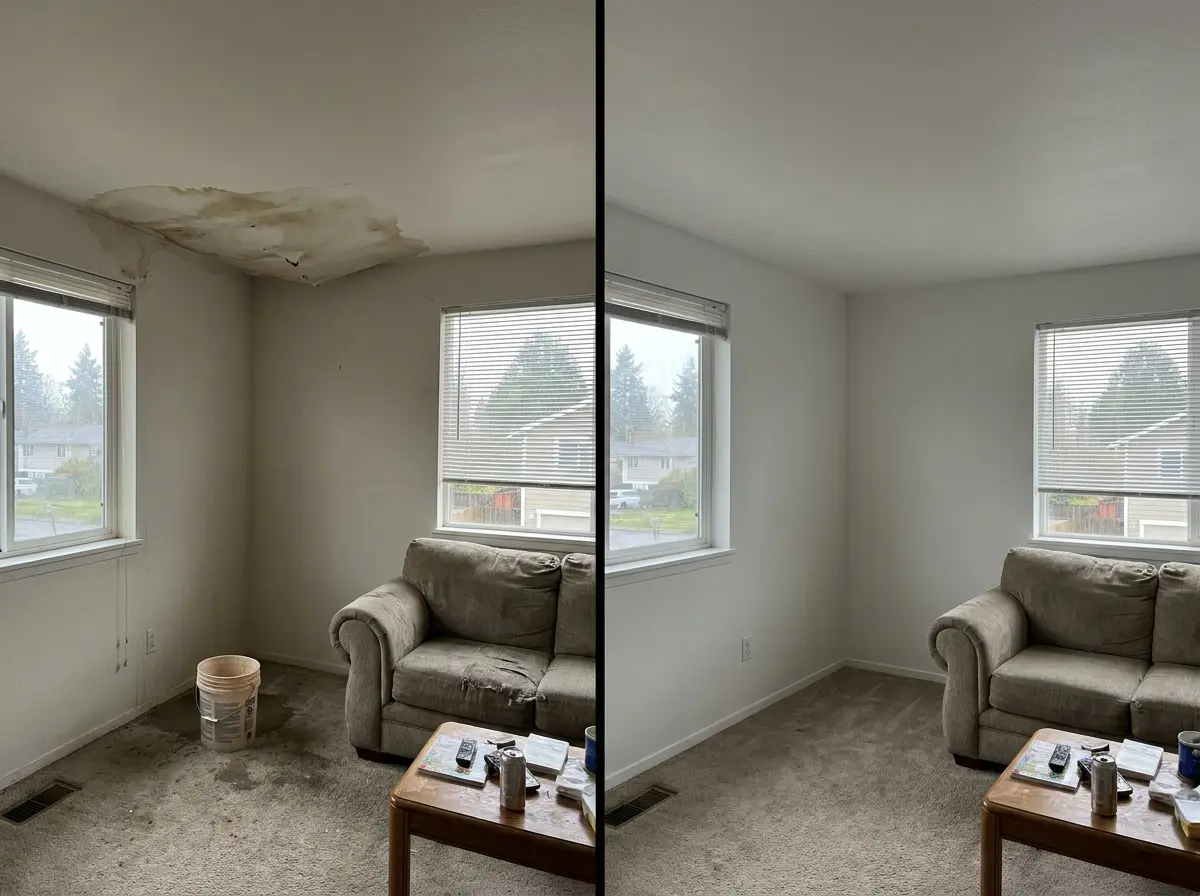
That stain on your ceiling is not the damage. It is the signal that water has been leaking for days or weeks. Above it, attic insulation is already soaked, the roof decking is wet, and mold may be growing in the dark. Water Restoration Pros goes into the attic, maps the full extent of the damage, dries the structure, and documents everything for your insurance claim. Local to Everett since 2021. On-site in 60 minutes.
A dripping ceiling cannot be turned off at the main shutoff. The only way to stop active water entry from the roof is a tarp. Water Restoration Pros arrives within 60 minutes, tarps the breach to stop active entry, and begins the attic assessment in the same visit.
While we are on-site, here is what happens:
While waiting for us: put a bucket under the active drip. Do not poke a bulging or sagging ceiling to release the water. A ceiling holding accumulated water can collapse suddenly under the weight. If the ceiling is actively bowing, call immediately and stay clear of the area.
Roof leaking into your home right now?
Our Everett crew is ready — same-day response, any hour.
We are based in Everett and have served Snohomish County since 2021. When you call, you reach a local crew that knows how Everett roofs age, where moss grows, and how our wet climate turns a small flashing gap into a six-month leak.
Most homeowners never do. The attic tells the whole story of what the leak has done, and we find it with moisture meters and thermal imaging on every job.
Gradual leaks from wear are excluded. Storm-caused breaches that leaked are covered. Documenting which scenario you have is the most important step.
Attic insulation removal, structural drying of rafters, and ceiling repair are the core of what we do.
We follow the restoration industry standard on every job.
The first few hours shape how wide the damage spreads. Follow these steps in order.
Place a bucket under an active drip. If the ceiling is bulging or sagging, stay out of the room. Do not poke the surface to drain it. A ceiling holding backed-up water can collapse under the weight when punctured.
Water travels across insulation horizontally before it drops. The wet area on the floor can spread farther than the stain suggests, and it can appear in a different room from the entry point.
Photograph the stain, the drip point, and any visible exterior damage on the roof you can safely see from ground level. The date of your first photo matters for the insurance claim.
Wet roofing is extremely slippery. Leave the roof assessment to professionals. A temporary tarp is a two-person job with safety equipment.
Fans push warm air into wet wall cavities and accelerate mold growth in already-damp conditions. Leave the drying to professional equipment once we assess the full extent.
The roofer fixes the penetration. We handle everything inside: the attic, the insulation, the wet framing, and the ceiling. Call both at the same time so interior damage does not sit while you wait for the roofer appointment.
Worried hidden water damage is spreading in your attic?
We find moisture behind walls and in attic insulation before mold takes hold.
Almost all of the damage from a leaking roof happens above the ceiling, not at it. The attic is dark, largely unvisited, and often warm from the sun heating the roof surface. It is the ideal environment for moisture damage to grow unchecked for months.
Fiberglass batt insulation soaks up water like a sponge and holds it for weeks after the rain stops. Unlike drywall, wet insulation cannot be dried in place. It permanently mats and compresses when wet, loses most of its insulating value, and provides a sustained damp substrate for mold. Blown-in cellulose is worse: it clumps, binds moisture, and releases it very slowly. Wet attic insulation must be physically removed. Attempting to dry over it without removal is one of the most common reasons mold reappears weeks after a visible leak is addressed.
When insulation stays wet for days or weeks, the moisture transfers into the wood rafters and the plywood or OSB roof deck. Wood absorbs moisture slowly, but sustained contact causes swelling, deformation, and eventually rot. A rafter with active rot cannot be dried and returned to full strength — it has to be sistered with a new member alongside it, or replaced. A roof deck with delaminated or rotted panels needs replacement before a new roof surface can hold. Early discovery is the only thing that prevents a ceiling stain from becoming a structural repair.
In Everett's cool, damp climate, mold can begin growing on wet attic insulation within 24 to 48 hours. It spreads across the insulation paper, up the rafter faces, and onto the roof deck surface. Because the attic is unoccupied and dark, it grows without any visible sign in the living space below. The first indication is often a musty odor that appears indoors weeks or months after the leak started, or mold pushing through the ceiling drywall from above. At that point, the mold remediation scope is significantly larger than it would have been at first discovery.
A leaking roof is different from a burst pipe. With a burst pipe, a plumber and a restoration crew both work on the same floor of the building. With a roof leak, the roofer and the restoration company work on entirely different parts of the structure.
The roofer works on the exterior roof surface. They identify and seal the penetration: replace the lifted shingle, reseal the failed flashing, repair the cracked valley. Their job is to stop water from entering at the roof. They do not enter the attic, remove insulation, or dry the interior structure.
We handle everything below the roof surface: the soaked attic insulation, the wet rafters and deck, the ceiling drywall, and the full structural drying and documentation. Our scope begins where the roofer ends. This is why both calls need to happen at the same time. Starting the interior assessment while waiting for the roofer appointment prevents days of additional moisture damage.
If the roof failed from a storm event, the roofer bill for the damaged shingles may be covered, and the interior water damage is covered as a sudden and accidental event. If the roof failed from gradual wear, neither the roofer bill nor the interior damage is covered. The source determines the coverage, which is why documentation matters so much.
Roof leak restoration is organized around the attic first, the ceiling second. The damage is above. We work from the top down.
We tarp the roof breach to stop active water entry, then immediately enter the attic. Moisture meters and thermal imaging map the full extent of soaked insulation, wet decking, and wet rafters before any removal begins. This gives us the true scope of the job, not just the visible ceiling damage below.
Wet insulation is bagged and removed from the attic. This is not optional. It cannot be dried in place. Removal exposes the wet deck and rafters for proper assessment and drying, and it eliminates the sustained moisture source that feeds mold growth.
With insulation removed, industrial drying equipment runs until rafter and deck moisture readings meet the ANSI/IICRC S500 dry standard. Attic temperatures naturally run higher than the rest of the house due to roof surface heat, which supports faster drying once the insulation is gone and airflow is established. We monitor daily.
Once the attic is dry, we address the ceiling below: remove and replace saturated drywall, treat any mold growth on the drywall surface, and dry the wall framing if water traveled down into the walls. This step follows the attic work, not the other way around.
A complete moisture log and photo record is prepared for your insurance adjuster. We document the attic damage, the insulation removal, the structural drying, and the ceiling repair as a single connected record. New insulation is installed once the structure is certified dry.
Ready to restore your Everett home after a roof leak?
One call covers drying, mold prevention, and full insurance documentation.
The most important insurance fact for a leaking roof in Washington: gradual water damage from a slow leak is specifically excluded from standard homeowners policies. Sudden, storm-caused damage is covered. Both can look identical from inside the home.
If a storm damaged your roof and water entered through that breach, the interior damage is covered as a sudden and accidental event. This includes attic insulation removal, structural drying, mold remediation, and ceiling repair. The roofer bill for storm-damaged shingles or flashing may also be covered.
Slow leaks from aging shingles, dried sealant, or deteriorating flashing are gradual damage — specifically excluded. The attic insulation, ceiling repair, and mold remediation from a slow drip are all out of pocket.
Documentation is the defense: the storm date, evidence the roof was intact before it, photos of the breach, and a damage narrative tied to the weather event. We build this record into the restoration file.
The hardest cases involve aging roofs a storm then breached. The insurer argues the roof was already failing. We document the breach thoroughly and can recommend a licensed public adjuster when the claim is contested.
Roof leak restoration cost tracks directly with how long the leak ran before it was found. Here is a breakdown by damage depth.
| Damage depth | Typical cost | What it includes |
|---|---|---|
| Fresh stain, no attic damage | $500 to $3,000 | Ceiling drywall, drying, no insulation removal needed |
| Attic damage, no mold | $3,000 to $10,000 | Insulation removal and replacement, structural drying, ceiling repair |
| Attic damage with mold | $8,000 to $20,000 | Insulation removal, mold remediation, attic drying, ceiling repair |
| Structural rot in rafters or deck | $15,000 to $40,000+ | Structural repair or replacement on top of full restoration |
The cost table is also a time table. A stain caught in the first week lands in the top row. A stain discovered after six months of slow dripping often lands in the third or fourth. The single most effective cost-control measure is calling the day you see the stain, not watching it.
Want a full quote with water damage repairs included?
Free same-day assessment — we document and bill your insurer directly.
Everett gets over 48 inches of rain per year. Four local factors make roofs here more vulnerable than in drier climates.
Mild temperatures and constant moisture create ideal conditions for moss on north-facing and shaded sections. Moss holds moisture against shingles continuously, accelerating breakdown and lifting shingle edges where water wicks under. It rarely causes an immediate leak but shortens shingle life and leads to flashing failure.
The metal around chimneys, skylights, and roof valleys is the weakest point on any roof. In Port Gardner and Bayside, salt air off Puget Sound corrodes flashing faster than homes inland. A gap as small as 1/8 inch is enough to allow water entry at Everett rainfall volumes.
Everett averages around 15 freezing days per year. Attic heat melts roof snow, which runs to the cold eave and refreezes, forcing meltwater backward under the shingles.
Over a third of Everett homes predate 1970. Standard asphalt shingles last 20 to 25 years. Many of these homes have original or early-replacement roofing past its rated lifespan — and an aged roof can fail at multiple points in a single atmospheric river event.
We cover all of Everett, including zip codes 98201, 98203, and 98208. Port Gardner and Bayside properties along the Puget Sound waterfront face salt air that corrodes metal flashing faster than inland homes, making flashing failure the most common cause of leaks in these neighborhoods. Northwest and central Everett have the highest concentration of pre-1970 homes with aging roofing systems. Every Everett neighborhood gets 48 inches of rain a year and faces the same moss risk on shaded roof sections.
Beyond Everett, we serve Marysville, Mukilteo, Lake Stevens, Mill Creek, Lynnwood, Snohomish, Bothell, and Edmonds. Coastal Mukilteo and Edmonds face the same salt air flashing vulnerability as Port Gardner.
Still have questions about roof leak repair?
Our Everett team is live right now — no bots, no hold music.
Our IICRC-certified crew is ready 24/7. We respond in 60 minutes — nights, weekends, and holidays.
(425) 433-9550